
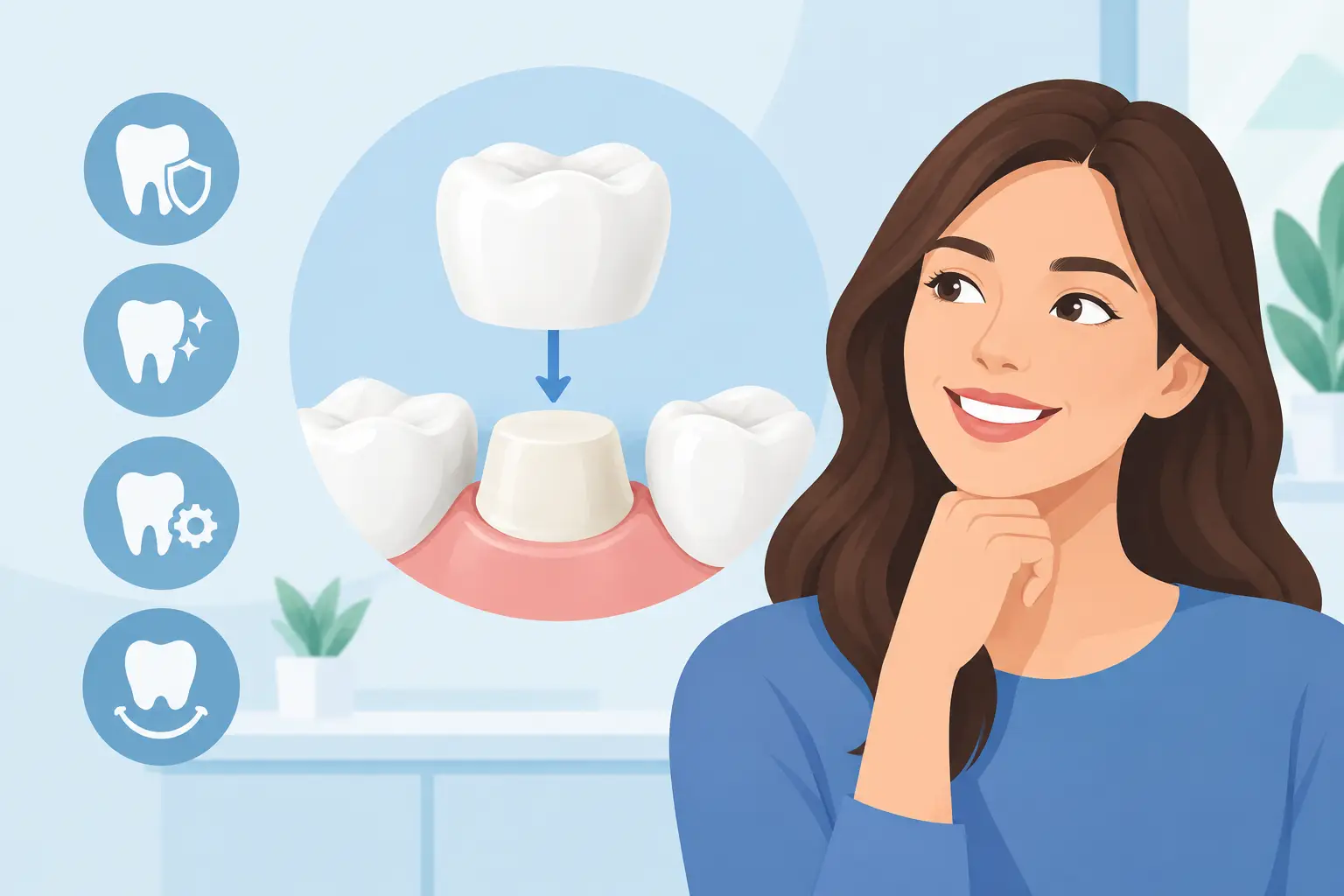
A tooth can look fairly normal and still be structurally weak. A large filling may leave only thin walls of natural tooth. A crack may flex under pressure. A tooth that has undergone root canal treatment may have lost a substantial amount of structure before and during treatment.
In situations like these, a dental crown may help protect the tooth and restore comfortable function. But that does not mean every tooth with a filling, crack, or root canal automatically needs one.
At Dawson Dental, we look at the whole tooth: how much healthy structure remains, whether anything moves or separates under pressure, the location and depth of a crack, your bite, your symptoms, and the tooth’s long-term outlook. The goal is to recommend a crown when it offers a meaningful benefit—not simply because placing one is possible.
What does a dental crown do?
A dental crown, sometimes called a cap, covers the visible portion of a tooth. It can restore the tooth’s shape, reinforce weakened structure, improve chewing function, and provide a natural-looking exterior.
The American Dental Association notes that crowns may strengthen teeth with large fillings when too little tooth remains to support another filling. Crowns may also protect weak teeth, restore broken teeth, support bridges, cover implants, or improve the appearance of certain teeth.1
The important question is not merely whether a crown can be placed. It is whether full coverage is the most appropriate and predictable option for that particular tooth.
Common reasons a crown may be recommended
A large filling has weakened the tooth
Fillings replace damaged or decayed areas, but they do not restore the strength of the natural tooth in every situation. When a filling occupies much of a back tooth, the remaining cusps—the raised portions used for chewing—may become thin or unsupported.
If those areas begin to flex, crack, or break, another filling may not provide dependable protection. A crown can surround the tooth and help hold the remaining structure together.
A tooth is cracked or fractured
Cracked teeth can be difficult to diagnose because symptoms may come and go. Patients sometimes notice a sharp sensation while chewing, pain when releasing their bite, or sensitivity to temperature. The American Association of Endodontists explains that treatment depends on the type, location, and extent of the crack.2
Not every visible line is dangerous. Shallow craze lines in enamel are common and usually do not require structural treatment. A fractured cusp around an old filling may be treatable with a filling, onlay, or crown depending on how much tooth remains. A deeper crack extending toward the pulp or root requires more careful evaluation.
A crown can reduce movement in a restorable cracked tooth, but it cannot make the crack disappear or guarantee that it will never progress. If a crack extends too far below the gumline or divides the tooth into separate segments, the tooth may no longer have a predictable restorative outlook.2
The tooth is badly worn or broken
Heavy grinding, clenching, erosion, trauma, and years of use can substantially reduce tooth structure. A crown may rebuild the tooth when a smaller restoration would not provide enough strength or coverage.
Before recommending treatment, we also consider why the tooth became damaged. A new crown will still be exposed to the same bite forces. In patients who clench or grind, addressing those forces—and sometimes using a protective nightguard—may be important for the long-term result.
The tooth has had root canal treatment
Root canal treatment and crown treatment solve different problems. Root canal therapy treats inflamed or infected tissue inside the tooth. A crown addresses the tooth’s remaining structure.
Some root canal-treated teeth benefit significantly from full or partial cuspal coverage, particularly when they have large restorations, cracks, or heavy chewing demands. However, the final restoration should be chosen according to the location of the tooth, how much sound structure remains, and the forces placed on it—not from a blanket rule that every root canal must receive the exact same restoration.
A crown is restoring an implant or supporting a bridge
A crown can replace the visible portion of a missing tooth when attached to a dental implant. Crowns may also serve as retainers for certain dental bridges. In those situations, the crown is part of a larger tooth-replacement plan rather than a repair for a damaged natural tooth.1
When might a crown not be necessary?
Conservative dentistry does not mean avoiding needed treatment. It means choosing the least invasive option that has a reasonable chance of lasting.
Depending on the tooth, alternatives may include:
- Monitoring a harmless craze line or stable area
- Repairing a small cavity or fracture with a tooth-colored filling
- Using an inlay or onlay when part of the tooth needs reinforcement but full coverage may not be necessary
- Bonding or a veneer when the concern is primarily cosmetic and the tooth is otherwise healthy
- Recommending no restoration when the tooth cannot be predictably saved
An onlay can be especially useful in the space between a filling and a crown: it can cover weakened cusps while preserving other healthy areas of the tooth. The right choice depends on the pattern of damage, available enamel, moisture control, bite forces, and the expected longevity of each option.
How we evaluate whether a crown is appropriate
A crown recommendation should follow an examination—not just an X-ray or a quick look at an old filling. Depending on the situation, the evaluation may include:
- Reviewing your symptoms and when they occur
- Examining the tooth under good lighting and magnification
- Checking the existing filling and remaining tooth structure
- Testing whether part of the tooth flexes or separates under gentle pressure
- Evaluating the bite and signs of clenching or grinding
- Using dental X-rays when needed to look for decay, infection, bone changes, or other concerns
- Checking the gums and determining whether the tooth can be predictably restored
Cracks do not always appear clearly on X-rays. The diagnosis often comes from combining the patient’s history, clinical findings, bite testing, and imaging rather than relying on any single test.
What is the crown process like?
If a crown is the right choice, the tooth is numbed and carefully shaped to create space for the restoration. Any decay or failing restorative material is removed, and the tooth may need a foundation or buildup when substantial structure is missing.
We then capture the information needed to make the crown. Depending on the workflow, this may involve a digital scan or a traditional impression. A temporary crown protects the prepared tooth while the final restoration is made. At the delivery visit, we evaluate the crown’s fit, contacts, appearance, and bite before it is bonded or cemented in place.3
Mild gum tenderness or temperature sensitivity can occur afterward. Pain that is worsening, persistent, or interfering with sleep should be evaluated.
Choosing the crown material
There is no single crown material that is best for every patient or every tooth. Material selection depends on:
- Where the tooth is located
- How visible it is when you smile
- The amount of space available
- Your bite and grinding history
- The condition of the opposing teeth
- The color and translucency of nearby teeth
- The design needs of an implant or bridge
Modern ceramic materials can provide an excellent balance of strength and appearance in many situations. Other cases may benefit from metal-containing or alternative restorative materials. We will explain the practical tradeoffs rather than presenting one material as universally superior.
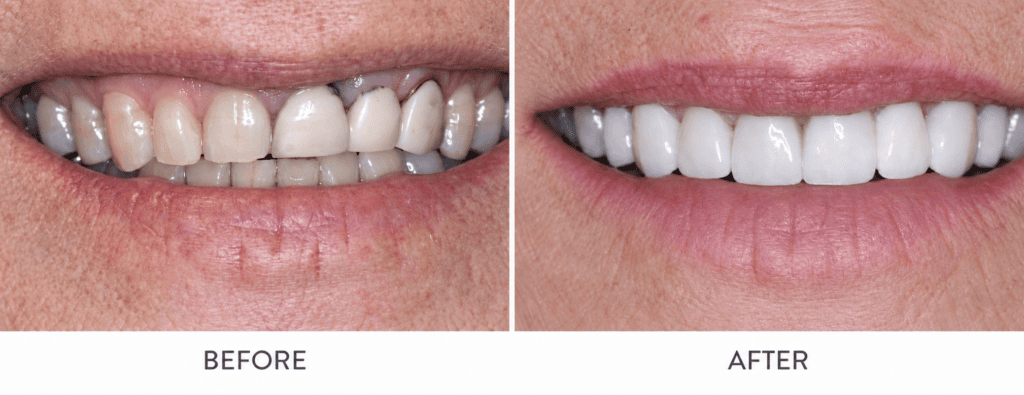
Before-and-after aesthetic crowns and bridge treatment performed at Dawson Dental.
How long should a crown last?
No responsible dentist can promise that a crown will last forever. Its lifespan depends on the health of the supporting tooth, the quality and fit of the restoration, home care, diet, bite forces, grinding, and whether decay develops near the crown’s edge.
Good brushing, daily cleaning between the teeth, regular examinations, and avoiding habits such as chewing ice can help protect both crowns and natural teeth. A crown can still develop a chip, loosen, wear, or require replacement over time.3
Please contact us if a crown feels loose, develops a sharp edge, breaks, or causes persistent discomfort. Swelling, fever, severe pain, or spreading facial swelling may require prompt evaluation.
A clear recommendation starts with the tooth in front of us
Two teeth can look similar on an X-ray and still need different treatment. One may be stable enough to monitor. Another may need a filling or onlay. A third may have a crack or loss of structure that makes a crown the more dependable choice.
If you are concerned about a cracked tooth, a large filling, or a recommendation you received elsewhere, we are happy to evaluate it and explain the options. Dawson Dental provides conservative care and honest recommendations for patients in Peoria and the surrounding Northwest Valley. Call (623) 566-1310 to request an appointment.
Dr. Dawson’s Two Cents
Every patient, and every bite, is different. We see cracks in teeth every day, but not every crack requires treatment. When a crack is large enough that the tooth structure begins to flex or separate, and we can feel it with our instruments, acting promptly may help reduce the risk of the crack reaching the nerve or extending into the root.
References
- American Dental Association. Crowns. MouthHealthy. Accessed September 13, 2026.
- American Association of Endodontists. Cracked Teeth. Accessed September 13, 2026.
- Cleveland Clinic. Dental Crowns: Types, Procedure & Care. Medically reviewed; updated April 14, 2023. Accessed September 13, 2026.
This article provides general educational information and is not a diagnosis. Treatment recommendations depend on an in-person examination and the condition of the individual tooth.